Shinala, or Amazons
A Lakelands setting post
Most of the Unbound crave human worship, attention, or service, but not all of them do. Some of them lack any interest in humanity. While the Howling Rustic decided to make its own version of a terrestrial hominid, the Sulphur Herald remembered its former subjects. Long ago it held sway over the peoples of two planets: on Yir and its moon Sdikga it governed the drakemantids and amazons, while on Nkamvond it commanded the psanzomv, often called spacegnomes in the Lakelands. It lost its cult-empire millennia ago when the Unfolding Emperor recalled it for other tasks, but once it was freed of its master’s shackles, the Sulphur Herald turned its mind to its former holdings. Dominating only as many humans as it needed, it designed and ordered the construction of an interplanetary portal that opens onto Yir and Nkamvond; while unable to pass through that portal itself, it could send emissaries, which it used to lure its servants' descendants through. Now it's trying to rebuild its old empire on Earth, terraforming and colonizing as much as it can.
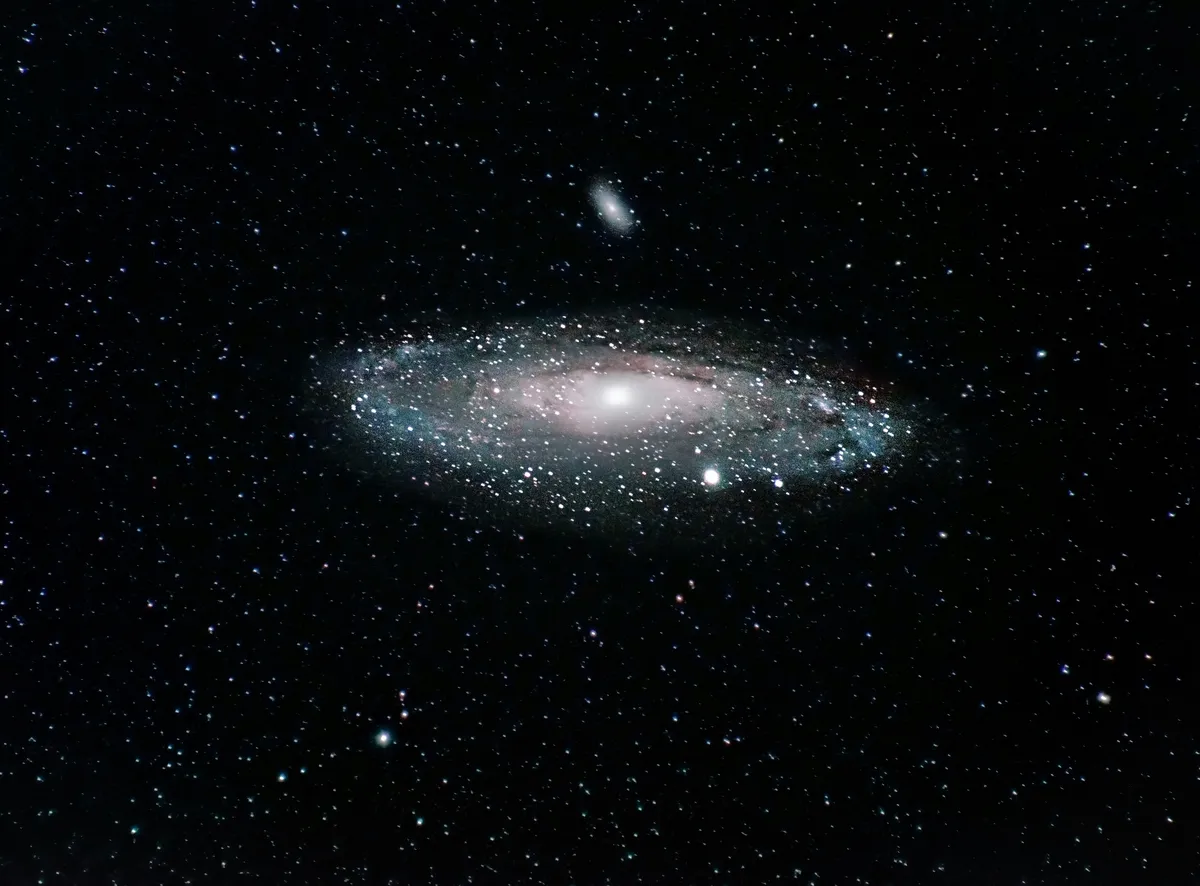
Credit: Dario Brönnimann, 2021
The shorter and softer-bodied inhabitants of the two peoples on Yir have as many names as there are languages, as tends to be the case: shinala (ʃaɪnələ / shine-ul-uh) in the local alien creole Ladhis, etshinulu in the Yiran tongue Udzhith (from which shinala is derived), and kirazzedu in its neighbour Ssenguri. In English they are called amazons for the warrior women of Greek legend, not because they're more bellicose than anyone else but because they're always female.
At one point in their evolutionary development the shinala species had males, and they were capable of both regular sexual reproduction and parthenogenesis. Sometime during Yiran prehistory, however, the males began to die off; Sarladhiner scholars debate whether their extinction was a case of mutation, of a disease that was fatal in male shinala, or of environmental changes that only the females of a sexually dimorphic species could survive. While there is some paleontological record of male shinala, there isn't enough to answer the question of their disappearance or to provide much insight into what they were like. Whatever the cause, the species survived through parthenogenesis alone by the time of the earliest written records. Pregnant shinala give live birth to full clones of themselves, except in the case of genetic mutation. Most clonal lineages retain a pair-bonding instinct; in other words, amazons usually still seek a romantic and sexual life partner despite being able to give birth without one.
The average height of a shinala in the Lakelands is 3' 1". They superficially resemble Earth's velvet worms, with their soft tube-shaped bodies, round unexpressive mouths, and two long facial tentacles. Amazon eyes, however, more closely resemble those of a cuttlefish, with a smoothly-curving W-shaped pupil. They walk bipedally and upright, with a short, squat frame, and they have four arms. Each has a five-fingered hand; two fingers oppose the other three. Shinala are obligate carnivores, originally cooperative ambush-hunters in low-light forest and wetland environments, specializing in taking down large prey and storing it for later consumption. According to Lakelander extraterrestrials, Yiran scientists believe that their sapience evolved because their early ancestors were more likely to survive the better they were at coordinating ambushes, preparing traps or killing grounds, and hiding food from rivals. Although their faces do not emote much by human standards (nor by drakemantid standards, for that matter), they do express themselves emotionally by the positioning of their tentacles; other species are just much less capable of interpreting those signals. Among themselves they also touch their tentacles together for both tactile and chemical communication, a silent practice appropriate for a species that is both a cooperative ambush predator and a small soft-bodied animal that could be convenient prey for a larger carnivore.
Millennia after their emergence into sapience, amazons came into contact with drakemantids (tatiskajeda in Ladhis), with whom they have had a long-turbulent history. However, by the time that the Sulphur Herald built its portal to Yir, the two species were fully integrated in most parts of the Sarladhiner. As one should expect of two intelligent species spread over a planet and a moon, there are a wide array of regional amazon-drakemantid cultures on their homeworlds. Nearly all amazons and drakemantids that were brought to Earth belong to a few broad cultural coalitions, however:
- Trade Culture, referring to the groups which lived in the territories governed exclusively by the trade companies;
- Imperial Culture, referring to several of the groups which lived among the kingdoms and principalities into which the Howling Rustic’s empire broke up when it left; and
- Republican Culture, referring to groups that lived in the communes and republics that struggled for independence from the other two.
In very broad terms, the Trade Culture values self-reliance, cleverness, and physical toughness, while also reckoning a person’s place in society by the wealth they possess: laws produced by Trade Cultures emphasize private property and freedoms of speech and association (though not freedom of conscience). Imperial Culture, on the other hand, is much more communitarian and values interdependence and cooperation, while reckoning a person’s place in society by the position to which they’ve been promoted within the organizations they have joined. People from Imperial Cultures often try to import laws they're familiar with into new situations, though they have certainly had radical social experiments as well; either way, these laws rarely put much emphasis on freedom of expression or freedom of association, preferring to enforce social cohesion, good order, and hierarchy. As one example, while nearly every Trade Culture subculture has certain expectations for dueling, dueling is outlawed and considered horribly uncouth in all Imperial Culture subcultures.
Republican Culture, on the other hand, values humility, amiability, and honesty, while reckoning a person's place in society by how much they contribute to the common good – or at least how much they visibly contribute. As the product of various related independence movements and revolutions, Republican Cultures' laws exhibit a tension between enshrining freedom of conscience and other related freedoms on the one hand and on the other hand an expectation that individuals will make sacrifices for the public good.
Of course, all these cultural distinctions matter more for amazons that aren't culturally integrated into Lakelands societies. For all its efforts, the Sulphur Herald's Empire has leaky borders, and amazons, drakemantids, and psanzomv flee every opportunity they get. Many of Earth's shinala are now born in human-dominant settlements, so the mores and folkways of this planet are a larger influence than those of Yir.
Regardless of the society in which they were raised, all amazons share certain physical and psychological traits that must have cultural expression. First, the atmosphere of Earth does not provide them with the minerals they're used to ingesting in Yir's hazy air, so on this planet they must inhale the smoke from burning certain powders once or twice daily, suffering malnutrition if they don't. Second, pair-bonded amazons seem far more likely to produce children.1 Although amazons are always female, they have certainly noticed the gender roles of other species and presumably once had gender distinctions in their own evolutionary history. As a result, in many Sarladhiner societies amazons construct a third gender which a minority of them adopt, or take on the gender roles of their neighbours regardless of their own sex. In the Lakelands, this means many amazons call themselves non-binary or (less often) men, though it's worth noting that they're not usually as committed to these identities as non-binary or trans humans are.
More striking than any of these other cross-cultural traits, however, is the fact that the overwhelming majority of amazons are concerned about being part of a group or movement of other people. Specifically, they want to contribute to a community organized around some common activity or purpose. The group and the purpose could be almost anything: an empire and its expansion, a laboratory and its research, an artistic collective and its art, a birdwatching club and its birding. This desire is not uncommon at all among other sapient species, of course, since sapience most often evolves in social species. However, this desire appears to be more pronounced and more universal among amazons than among any other people in the Lakelands. According to the aliens on Earth, a controversial theory among Yiran scholars holds that early amazons were properly eusocial, or at least nearly so, and that this fact is obscured in the present day because the loss of male shinala also resulted in the loss of castes and in reduced brood care. That would explain how such a strong drive for cooperation transcends cultural influences in amazon psychology. As a consequence of this drive, wherever it comes from, there are very few selfish amazons, but that doesn't mean they are in general better people. Compared to other sapient species, lonely shinala are easier to recruit to dangerous causes, and even well-adjusted ones are more prone to sacrificing individuals or outgroups for the sake of their cause. Of course, as with any people, they have plenty of individual variation; the average amazon is more group-oriented, but there are always outliers.2
Amazons are also less interested in pets than either humans or drakemantids are, though they did develop animal husbandry during their prehistory. Nonetheless, though they yearn for community and for intimate companionship, most amazons don't find pets especially satisfying in this regard. Other sapient species, however, can in theory fit the bill, depending on the individual amazon, so more than a few human-centric militias, congregations, research groups, and hobby clubs have one or two very dedicated shinala members.
Although amazons don't all have a unified material culture, as a consequence of both their biology and their history in the Lakelands, there are trends. As obligate carnivores, shinala must eat meat, which makes up the majority of their diet. They prefer invertebrate meat, especially ant-sheep, which are livestock imported from Yire, but also shellfish and insects. Some, however, raise regular Earth livestock, like pigs, goats, and chickens. Given their stature, amazons tend to avoid herding cattle and horses, though they might breed ponies to ride. Most often they smoke meat when they need to preserve it, often in the smoke from the minerals they need to survive. Those whose cultural roots are predominately Trade Culture frequently make food in balls or patties, while those whose roots lean Imperial Culture prefer food served in bowls (like donburi more than like stew). With regards to weapons, amazons most often prefer blastlances but, as most lack access to such advanced technology, they tend to use staves or brandistocks, which are useful and easy to make, and also compensate for the amazon's height. Those who fight regularly also carry small weapons like knives or pistols, so that they can use more than one at a time with their four arms.
In the Lakelands, shinala names are usually Ladhis variations on Udzhith or Ssenguri names; the five most common are Jagreta (from Zzugreta, Ssen.), Shayet (from Ushuet, Udzh.), Triksa (from Triksu, Ssen.), Yena (from Enu, Udzh.), and Yinadje (from Inudzhe, Udzh.). However, they sometimes give their children "English" names, which they take from the plays and pre-Arrival books they consider prestigious (so many of them are not in fact English). Of these, the names of female characters who visit unfamiliar lands are most popular, like Viola, Wendy, Leia, or Tali, though sometimes they use male characters' names instead, like Odysseus, Gulliver, or Riker.3 Although they have surnames, they share them with their entire clone lineage, so they rarely have use for them except in records. Some shinala will have and use a middle name in place of a surname, but not usually and only when raised in mundane human- or geminite-centric communities.
Sample Amazon Settlement
Glidyanke
On the north shore of Lake Erie sits Glidyanke (glaɪdjənki / glye-dyun-kee), sometimes also spelled Gli-Dyanke, roughly meaning "northern great-port" in the Sarladhiner creole Ladhis.4 Shinala make up nearly all of its inhabitants, and the few remainder are mostly drakemantids. Ladhis is its common tongue and appears on all of its signage, though some places also use English for the convenience of travellers. The shinala townsfolk feed themselves through fishing, aquaculture (mostly mussels), insect farming, and Lakelands geese5 and ant-sheep ranching, though game from trapping supplements their diet; local vegetable farms provide greens for non-amazon residents. Glindyanke, however, has a mission beyond survival and a few creature comforts: its residents are devoted to the preservation and reconstruction of Sarladhiner scientific knowledge.
There are other towns that try to preserve and reconstruct Sarladhiner knowledge and culture, but they tend to have broader ambitions: history, philosophy, psychology, art, mathematics, and so on. Glidyanke focuses on science. While there are chemists and metallurgists working on materials development and oral historians trying to collect stories about the technology that existed on Yir, by far the largest research project is in amazon medicine, emphasizing diet and nutrition. One major problem is meeting shinala dietary needs in the Lakelands: can they get all the calories and nutrients they need through fishing, aquaculture, insect husbandry, and raising Lakelands geese? These endeavours, of course, cost resources, so Glidyanke's engineers support the medical research by making blastlances, sonic shields, and crystal matrix battery (CMB) packs, which the town sells to local and distant buyers. As a port town, they receive vessels from many prospective costumers, including the Rochester Dyarchy, Old World companies like EinzelLösungen, and various Great Lakes pirates. The town is divided on who they should trade with, but so far they have sold sonic shields and CMB packs to anyone as long as the price is right. The real barrier has been materials.
Sample Amazons
Pevensie Yinisatetsha
High Concept: Cheerful Chaotogenic White Pages Courier
Trouble Aspect: Makes Terrible Plans
People: Amazon
Other: An Excellent Distraction
Other: Proficient in Improvised Weapons
Other: Expressive Posture
Top Skills: Deceive, Physique, Provoke
Basic Fear(s): Hollowness
Manifest Fear: Horses
Consolation: Dance parties
Ideal: Compassion
Pevensie is irrepressible, which is a great disappointment to the many people who have wished to repress her penchant for chaos. It's not that she doesn't try to be disciplined; it's just that she's very bad at it. Raised by her mother and aunt (her actual aunt, not her mother's lover) in Tricity and named for the children in The Lion, the Witch, and the Wardrobe, Pevensie struggled to find a place for herself given that her greatest skills appeared to be starting trouble and lying her way out of it again. Most organizations can use the second skill but not the first. A patient soul in the local historical society, however, needed someone to act as a courier between themselves and other members of the White Pages Society, so they decided to give her a chance. This worked well enough for everyone: she was eager to prove herself, her mother was grateful that she'd found a cause, and Tricity was relieved that she was around less often.
As with most amazons, Pevensie has no facial expressions to read, which does help her with lying. Despite her skill at dissembling, however, she has little trouble communicating her emotional state because she does not sit nor stand still: her body language is more or less transparent to everyone. She spends much of her time carrying messages back and forth between different museums and archives and has become a true believer in the White Pages' goals and methods, even if she lacks the attention to detail needed to do much of the research herself. As a courier, she still plays an indispensable role in their activities – even if her provisions and planned routes sometimes leave her employers bewildered. Her hardiness, resourcefulness, and amiability have gotten her out of every scrape so far. (Once she ran into the notorious raiders known as the Massassauga Caravan and somehow left them with more supplies than she started with.)
Rashre
High Concept: Well-Travelled Witch-Hunter
Trouble Aspect: Overly Familiar
People: Amazon
Other: Clever Lidjetiran Abjurer
Other: Practiced Shield-maiden
Other: Always Welcome In Glidyanke
Top Skills: Folkways, Stealth, Will
Basic Fear(s): Injustice
Manifest Fear: Blizzards
Consolation: Singing dizrensa (ie. Sarladhiner heroic ballads)
Ideal: Naretshi (chivalry)
Born in Glidyanke, Rashre (ɹəʃɹə / rush-ruh) grew up speaking Ladhis with drakemantids and fellow shinala who remembered and reclaimed Sarladhiner; she did not speak a word of English until she was in the middle of her adolescence. She also grew up with tales of the Sulphur Herald's regime and the Takers, occult spies who would try to recapture shinala and drag them back to that terrible empire. When she was very young, she feared these traitors to their people. When she was a little older, though, fear hardened into anger and she sought an education that Glidyanke was too materialist to give her: she wanted to know how to fight the Weird, so she would be ready if the Weird ever came to claim her. Her father found people to train her in the use of sonic shields, blastlances, and every neighbouring tongue, but she knew none of these could guard her mind. Eventually some witch-hunters came by to purchase Sarladhiner tech and she left with them as their apprentice.
Rashre was not with that band of witch-hunters long before they splintered from personality conflicts. She followed one fragment to another roving group of monster-slayers; then she joined a bunch of mere mercenaries, then another group and another. Some died. Some were arrested. Others drifted apart. Along the way she learned much about Lidjetira abjuration, and has helped apprehend or slay Taker kidnappers, dark enchantresses, warg mind-breakers, and a minor idol. Alas, she still has not found what she truly seeks. She wants to be a member of a party of blood-bonded adventurers. She wants boon companions, like in the stories she heard as a child of the Poet-Judges of Edhusi, who travelled in groups of six to mete out justice where no courts prevailed, and of the Bandit-Wives of Sdikga, wedded foursomes of amazon revolutionaries who prowled the moon. Surely Earth too must have such things: she has heard of the Knights of the Round Table, of Charlamagne's Paladins, of rōnin and gunslingers and the Merry Men. Each group she joins she hopes will grow together into a passionate company but, so far, none have. Does no one care about anyone else, or is there something wrong with her? She doesn't know how many more groups she can join just to be heartbroken again.
Yidhe Gasana
High Concept: Introverted Autodidactic Sleuth
Trouble Aspect: All Work, No Play6
People: Amazon
Other: Knows Farm Work
Other: Brace Of .32 Magnums
Other: Pen Pals From Windsor To Ottawa
Top Skills: Burglary, Empathy, Notice
Basic Fear(s): Guilt, Suffering
Manifest Fear: Star-nosed condylure
Consolation: Listening to the rain while dry
Ideal: Diligence
Yidhe Gasana (jaɪði gəsənə / yie-thee guh-suh-nuh) and their twin sister Yidhe Tsekin (jaɪði ʦikaɪn / yie-thee tsee-kine) were born to a farmhand on a drakemantid family's farm (it's traditional for amazons to give multiples the same first name and different second names). Yidhe Tsekin loved stories of the Sarladhiner and eagerly learned both Udzhith and Ssenguri, preferring them to Ladhis, but the so-called homeworlds were always so far away for Yidhe Gasana. Perhaps it was the nostalgia which coloured their community's tellings, but what good were idylls of luxurious technologically-advanced cities when they lived instead on a rustic farm with rotting equipment, implicit danger, and more than enough work to go around? What mattered to them, and to their calculating mind, was what lay beyond the horizons of the world they lived in. One day they decided to visit the nearest human and new hominid neighbours and listen to every story that they would tell. When Yidhe Gasana was old enough to make their own decisions, they left their sister to aid their mother and moved to Tricity, which of all the places they'd heard about seemed to have the most promise. Sometimes they don't feel guilty about leaving their family behind.
Yidhe didn't move to Tricity to escape work. They don't shun labour. However, the employment that calls to them is unusual. The Earth tales that appeal to them most are detective stories, and they have modelled themselves as much as possible after the private investigator. The room they rent in a local dormitory is stuffed full of G. K. Chesterton, Franklin W. Dixon, and Ellery Queen. Although they've spent time here and there in a few industries, getting their hands dirty, Yithe now lives off various contracts to investigate mysteries: thefts, missing persons, sabotage, espionage, and from time to time murder. Although most of this work is in Tricity and its allied settlements, they have also been asked to consult on cases in nearby Sinjack and farther afield in the Thames Baronies. To educate themselves in the techniques of investigation, they wrote to people knowledgeable in that trade across the Lakelands and now maintain a lively correspondence with a number of pen pals. Yidhe says these pen pals make up her community, along with the imagined lineage of detectives both real and fictional, from Nancy Drew and Tracer Bullet to Allan Pinkerton and Rajani Pandit. Yidhe believes they're happy. They're wrong.
As always for my Lakelands posts, everything in this post is provisional and subject to change.
Some parthenogenetic lizards seem to have greater fecundity if they engage in pseudocopulation. The New Mexico whiptail is sometimes called the "lesbian lizard" for this reason.↩
Although it might seem that this means amazons must have either Absurdity or Isolation as their Basic Fear, that's not the case. The desire for community might be a strong drive for all of them, but that doesn't make it their strongest drive or preoccupation. All it means is that the amazon is likely to try to address their fundamental anxieties through some larger movement or organization. Amazons with Injustice as their Basic Fear will likely seek a group oriented toward radical political action (or vigilantism), for instance, while amazons besieged by Suffering might gravitate toward philanthropic societies, mutual aid networks, or skill-building co-ops.↩
Popular in the Lakelands are those plays they know as conservations, which are stage adaptations of pre-Arrival television shows and video games. Very early post-Arrival certain idealistic nerds wanted to conserve (hence the name) fiction in media unlikely to be accessible in a destabilized world, so they adapted their favourite television shows and video games into non-electronic media like prose, poetry, or plays. Enterprise III, Part 3 is one especially ubiquitous conservation play, while Shepherd and Sovereign is a conservation epic poem.↩
The suffix -ke is an augmentative, so that dyanke is an emphasized form of dyan, meaning "port." This is usually rendered "great-port" in English, but that's not entirely accurate; it more suggests a port that is very port-like or very typical of ports. The town was originally just Dyanke, until it changed its name to Gli-Dyanke to distinguish it from a few other locations also called Dyanke to the south. Those other places were destroyed or changed their name in the interim, so the directional prefix is now unnecessary, but the name has stuck (though the hyphen is usually dropped now).↩
Lakelands geese are flightless descendants of Canada geese, about the size of an emu.↩
I am very serious about "All Work, No Play" being a viable Trouble Aspect in the Lakelands. Recreation is not just important for staying sane in harsh conditions; taking part in recreation together helps build the trust that communities need if they're going to function. Having fun isn't enough to build that trust, of course, but a person who won't kick back with their neighbours in any capacity will struggle to nurture those bonds. This focus on a realistic consideration of trust and community is a core part of the setting's ethos.↩