Ogre & Ogre-folk
A Lakelands setting post
Ogre
In a dreamzone, anything can become more than what it is, so long as some sapient mind nearby attaches unconscious significance to it. Those objects that are more symbolically potent, like a skull or a rose or a cross, are therefore more likely to change, and anything elevated with meaning by the right ritual will become invested with new power. Blood, for most of us, is as substances go among the most symbolically loaded. When blood is shed ritually in a dreamzone, then, it becomes strange indeed. It's called dreamblood and its uses are many.
Dreamblood at first seems no different than ordinary blood, but it's a unique and powerful ingredient in potions, poisons, powders, medicines, oils, and drugs. Specifically, it appears to emanate a small, weak dreamzone of its own. Of course, most people in the Lakelands don't think of it that way. If they have any precise idea at all of dreamblood's use, it's that a person can use it to make Weird potions, oils, and so on that still work outside of a dreamzone.
It is, therefore, one of the primary ingredients of ogre. Ogre is a combat drug with an almost mythical status in the Lakelands. For hominids and some other mammals,1 the first dose is incredibly powerful: a person's effective strength is doubled for about two hours after injection, their fear is entirely suppressed, and their pain tolerance is infinite, as far as anyone can tell. They also heal minor wounds much faster than anyone can explain. Some users report improved reaction times, alertness, and endurance, though these claims are not well-attested empirically. There are some side effects, however, and can include increased aggression, some sensory sensitivities to repetitive sounds or artificial lights, and loss of response inhibition, depending on the individual. The after-effects are also significant: all users are physically and mentally exhausted for one to three days, starting immediately after the initial effects wear off, and sometimes report the side effects continuing through this period. However, beyond that, there are no known long-term effects from a single dose, except for the possible psychological response to what the user did during their time on ogre (sometimes a boost in confidence, sometimes PTSD or survivor's guilt).
The second dose kills most people who attempt it.
A second dose of ogre within five years of the first dose drastically transforms the user's body and, without careful and well-informed intervention, they will not survive these changes. There are no exceptions: no one has taken a second dose within this time frame and not started to transform within fifteen to thirty minutes, and no one has survived the transformation without diligent care and guidance. Although there isn't just one way to shepherd someone through this transformation, most people don't know any method that works; the few who do tend to be cultists or sorcerers, or at least they learned the techniques from cultists or sorcerers. These techniques always involve both medical intervention and ritual spellcasting, though not all groups use quite the same medicine and spells.
A person who survives this process is half again as tall as they were previously and almost five times heavier, mostly in muscle, and as with the first dose they also have greater pain tolerance, reduced fear, and inexplicably efficient recovery from wounds and illnesses. Unfortunately, they tend also to permanently suffer the usual negative side-effects, along with a few new ones: aggression, sensory sensitivities, diminished response inhibition, poorer recall, and attention dysregulation. They don't benefit from improved alertness or reaction times, either. In the Lakelands, these survivors are generally called ogre-folk, and are said to be ogre-warped.
Different militias, raider gangs, and mercenary companies have different attitudes toward ogre. Some stockpile it officially and distribute it to soldiers in specific, well-defined situations. Others ban it, though personnel might buy and use it nonetheless. Yet others ban it officially but rely on their soldiers disobeying those policies in certain situations, and put some effort into guiding those soldiers toward using it at the right time. Others still are inconsistent in their attitudes and policies because of conflicts in leadership. Regardless, there are real benefits and hazards with ogre. On the one hand, the drug makes soldiers much more comfortable and competent in battle, and enemies who know a unit is on ogre are likely to desert the field. On the other hand, cocky young soldiers sometimes think that they can survive a second dose when they very much cannot, or that they can power through after-effects when, again, they very much cannot. Ogre-enhanced soldiers also lack discipline, and there's no way to practice fighting while on ogre when the second dose always kills.
Ogre remains a valuable commodity in the Lakelands, as demand is typically higher than supply. One of the reasons for this is that more than a few groups try to make ogre-folk deliberately.
Ogre-Folk
Ogre-folk are feared in the Lakelands. They are not, of course, intrinsically evil, but many Lakelanders think they are, as do many people abroad. Neither are they universally unintelligent, though that is again a common belief. Ogre-folk do, however, suffer cognitive impairments, at least compared to who they were before their transformation. Increased aggression, poor recall, difficulty regulating their attention, and impaired response inhibition make life difficult for ogre-folk and make life difficult around ogre-folk. On top of all that, they tend to be easily irritated by their environment and the people in it, given their sensory sensitivities. Patience does not come easily to most ogre-folk. Someone who had an excellent memory with good emotional regulation and impulse control before being ogre-warped will be no more than average at these skills afterwards. Someone who already struggled with these mental tasks will have a very hard time of it once they're ogre-warped. Their huge muscles also require lots of calories and protein; in the post-apocalyptic Lakelands they are hungry all the time. Being big, strong, tough, and fearless, they find violence a viable solution in more cases than most people do, though their values and norms don't necessarily change, so whether they take that route depends a lot on who they were before the transformation.
Unfortunately, the sort of person who becomes ogre-folk is more likely than average to choose violence. Most people who can shepherd someone through the second dose are the cultists of an idol or egregore cult, sorcerers in an esoteric society, or ogre-folk themselves who learned the methods from one of the other two. Therefore, the people they coach through the transformation usually fall into one of three groups: other cult members in thrall to a minor eldritch god; whatever unscrupulous or desperate souls the sorcerers could recruit into their service; or raiders who want to join the ogre-folk's gang. Many ogre-folk were for whatever reason ready to act violently in the name of a cause or their own appetites even before the first injection. There are reasons many Lakelanders believe ogre-folk are intrinsically evil.
Of course there are some isolated ogre-folk who defect from these groups and reject violence. There are many reasons people might break out of a cult, and these apply just as much to ogre-folk as to anyone else. Those who were kidnapped and forced to undergo the ogre transformation against their will are especially likely to turn coat. It turns out that a side-effect of the transformation is that no ogre-folk can bear or sire children, so some groups who can't recruit normally resort to force. They attempt to intimidate or brainwash their new members into adopting the group's ethos, but that doesn't always work. When ogre-folk defect from cults and gangs, they might end up serving a community of regular people, living alone in isolation, or gathering in small bands with others of their kind who seek what peace they can get.
Many ogre-folk were mundane humans before their transformation, but not all of them were. Among the varieties in the Lakelands are the ones sometimes called ettins, fomorians, trolls, and ogre-beasts.
Because it's hard to maintain concord2 while on ogre, geminites are less likely to take it than mundane humans are, but that doesn't mean none use it. Those who become ogre-folk are called ettins in Tricity and elsewhere in the Lakelands, for the multiheaded giants of folklore and fiction that they resemble. Ettins usually still care about concord to some degree or another; after all, they still have the same upbringing that they ever did. Alas, their diminished patience, impulse control, and emotional regulation make them worse at it. Most ettins follow a cycle of getting along (or at least almost getting along), then fighting outright, then sulking in resentment and shame, and then making up and trying to get along again. What varies from pair to pair are the ratios and durations of the phases more than the pattern itself. Sometimes one sibling might dominate the other but, more often, they are equals in jostling and in cooperation.
Half-nymphs have a harder time with ogre; their fungal parts react badly to the first dose of the drug, and grow into bizarre forms during the second dose. Half-nymphs whose vital organs are replaced with mould nymph tissue usually don't survive the transformation, even with the most reliable medical and ritual interventions. However, a half-nymph with a fungal limb or sensory organ will generally make it, though the organ or appendage will often be too small for their new proportions. Sometimes, two normal-sized arms or eyes will grow instead of a single ogre-sized one because the ghostly patterns in the mould nymph tissues don't know how to match the new, changed body. There are cases of even stranger growths, however: arms lined with teeth, for example. These partly-fungal ogre-folk are sometimes called fomorians for the Irish mythological giants with bizarre and irregular forms, though most Lakelanders don't know the origins of the term.
New hominids also have a difficult time with ogre. It's harder on their body; for them, side effects also include cardiovascular and connective tissue diseases. Furthermore, the results are a little less visually impressive: a 6' human becomes a 9' ogre-folk, on average, but a 4' new hominid becomes a 6' troll, as they're often called in the Lakelands. (The name comes from the elusive shaggy people of Norse folklore rather than their fantasy fiction descendants.) However, new hominids already have more explosive power in their muscles than mundane humans do, and that's true too for trolls: despite their size, they're invariably stronger than other ogre-folk. Because of their size, they also have about the same endurance.
Some ogre-folk gangs have discovered how to coax animals through the ogre transformation, too. In addition to the regular effects, the transformation seems to foster in these animals a friendliness towards any creature that's ogre-warped and a hostility towards any creature that isn't. Ogre-mutts are the most common ogre-beasts, but Lakelanders see ogre-cattle and ogre-swine among ogre-folk bands from time to time. One notable gang terrorized their way across Frontenac, Lennox & Addington, Hastings, and Northumberland counties with an ogre-tiger before the gang was tricked, defeated, and dispersed. No one has any idea how they got the animal in the first place, and the poor ogre-warped tiger still prowls Hamilton township and what remains of Cobourg.
Notable groups of ogre-folk include a gang with which New Guelph has an agreement, operating out of a dreamzone in the southern portion of old Guelph; the endocannibalistic hunter-trappers that drive visitors away from their haunt in the Hiawatha National Forest; the exocannibalistic marauders with fortresses in the Windsor ruins; and a monastery in Algoma county that seeks inner peace in isolation.
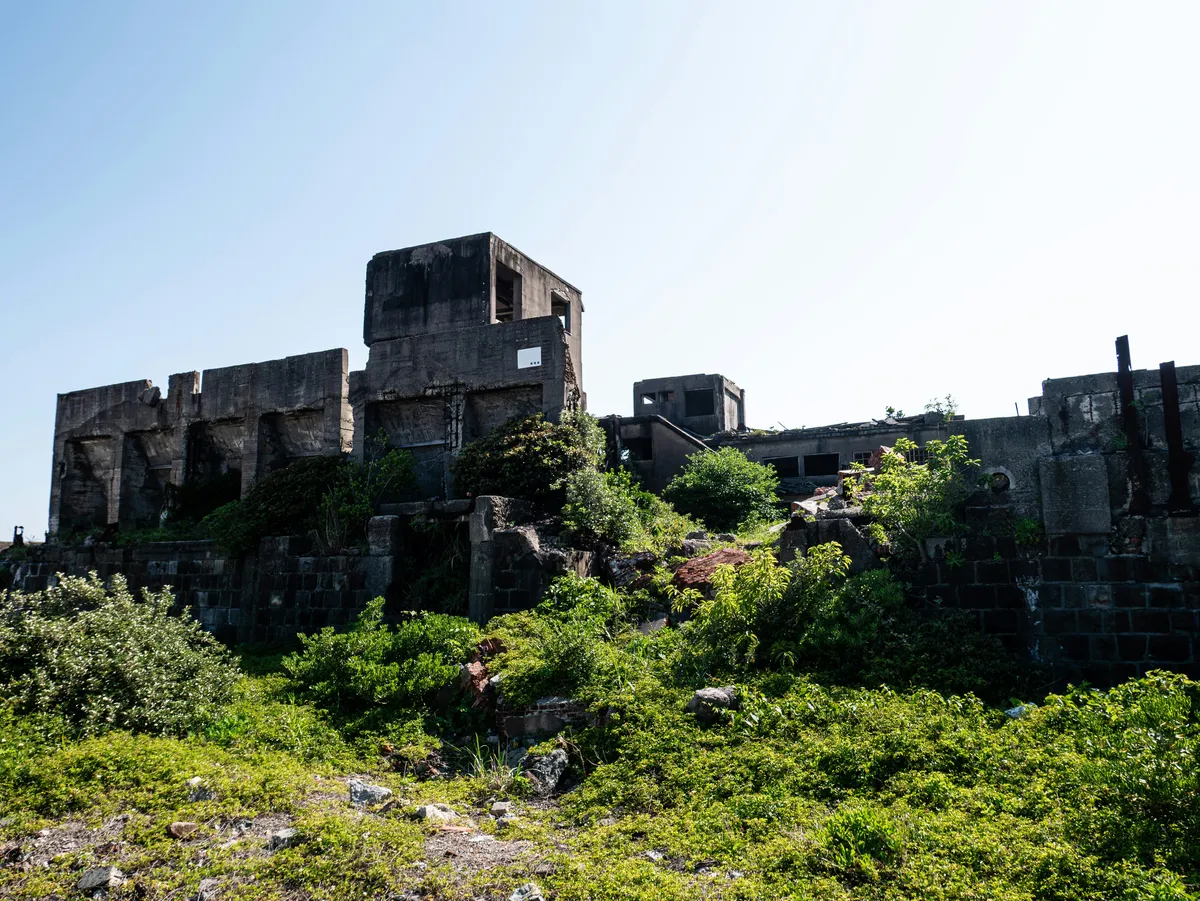 Source: Sascha Albert, 2026. Ogre-folk, who can tolerate more discomfort than most others can, sometimes lair in ruins like these.
This is, of course, a Lakelands post. It's also, however, a RPG Carnival post! This month I'm hosting the carnival and I chose the topic "Cyclopes, Ettins, Hill Giants, and Ogres." Please follow through to the round-up post, once it's live tomorrow, to see what everyone else has contributed.
As always for my Lakelands project, everything in this post is provisional and subject to change.
It's not yet clear which mammals ogre affects, and which ones it affects the way it affects humans. Dogs respond in much the same way as their primate companions; monkeys, however, despite a closer genetic relationship to humans, do not. Ogre is toxic to ray-finned fish, but birds are apparently unaffected. For amazons and drakemantids, it first acts as a soporific and then acts as a stimulant, with highly unpredictable durations for each effect, and there is no discernable difference between doses. Mould nymphs who use ogre are subjected to various unpleasant sensations like itching, dizziness, and chills for about two hours, with no other known effects. Scientists in Europe and Asia have procured samples and attempted various tests on it, but aren't able to determine how it works. Of course, most Lakelanders don't know most of this information and often believe misinformation. Rumours persist about a kind of ogre that works for anyone or one that can be used up to six times before the lethal transformation; other people say that it works better for non-mundane humans (or only mundane humans) when mixed with alcohol. None of that is true, and most people only really know what ogre will do to people like themselves.↩
Concord is the geminite norm of conjoined siblings never showing conflict in public and minimizing conflict in private. The specifics vary from place to place, and it is both a virtue (in the sense of a ethical skill requiring practice and intention) and a taboo. For more, read the "Geminites" post linked above.↩