The Bad Years
A Lakelands post
"Ant-sheep" is the common English name for one of the domesticated extraterrestrial insectoid animals, about as big as ewes, that the amazons and drakemantids brought with them to the Lakelands. Although ant-sheep are in general placid creatures, under certain conditions they will migrate, much like Earth's bees or grasshoppers swarm; when this happens, one of their number grows to terrible size and ferocity, in order to find new pastures and lead the flock there. Ant-sheep farmers prevent one of their animals from becoming such an ant-dragon by carefully managing the flock's biochemistry through diet and, when necessary, medication. This is a solved problem on Yir, and a rare enough one on Earth. Or, at least, it was a rare problem on Earth.
It's impossible to say how it all happened exactly. Twelve years ago, there was a drought. That's probably where it started. There was also a band of raiders, the Soot-Knife Gang, that pillaged their way across former Morris-Turnberry and Howick townships. Did the drought make them more violent than they would otherwise have been? Whatever the reason, they butchered everyone on at least a few farms, including two ant-sheep ranches. That autumn saw the start of a cnidarian parasite outbreak – or maybe it started earlier, in the spring or summer, in local wildlife populations. Several barstool theories blame the outbreak on the butchery, but none have been proven or disproven. What can be said with certainty is that, because of the Soot-Knife Gang, several flocks of ant-sheep were left untended. The winter was nearly as dry as the summer, and as a result the drought was worse the next spring. Between that and their abandonment, the feral ant-sheep started to migrate, each flock producing its own ant-dragon. These flocks tore through the Lakelands, looking for pasture but seldom finding it. Would-be dragonslayers tried killing the deadly morphs, but even when they succeeded, a new dragon would emerge soon enough to lead and protect the flock.
The Soot-Knife Gang, for their part, were discovered infested and zombified by cnidarians that year.
Three years of drought are hard anywhere, but in a place like the Lakelands they are bad indeed. The ranks of raider gangs and sorcerer cabals swelled, and more than a few towns turned into cults. Authoritarian tendencies worsened in places like New Guelph and Rochester, both of which expanded their reach. Grass and forest fires burned. Animals' ranges shifted, especially riparian species like lampwyrms and dragon swans. More dead farmers meant more feral ant-sheep flocks.
As far as weather goes, there was one good year after that, but a perfect summer does not rebuild a ghost town, rehabilitate bandits and wizards, or get feral ant-sheep under control. Then came three hard winters, buried in snow, and between them two of the wettest springs and summers the Lakelands had ever seen. The floods and crop blights were as bad as the droughts, and predators shifted their ranges yet again. So did the ant-sheep flocks. Even as the weather steadied in the years following, it was too late to stop the cascade of disaster. Over the course of a decade, scores of settlements collapsed and hundreds, maybe thousands, of farms were abandoned. In some cases, people fled regions they saw falling apart around them. In others, they stayed put, fighting for their homes and dying. Great swathes of the Lakelands now run wild.
Those were the Bad Years.
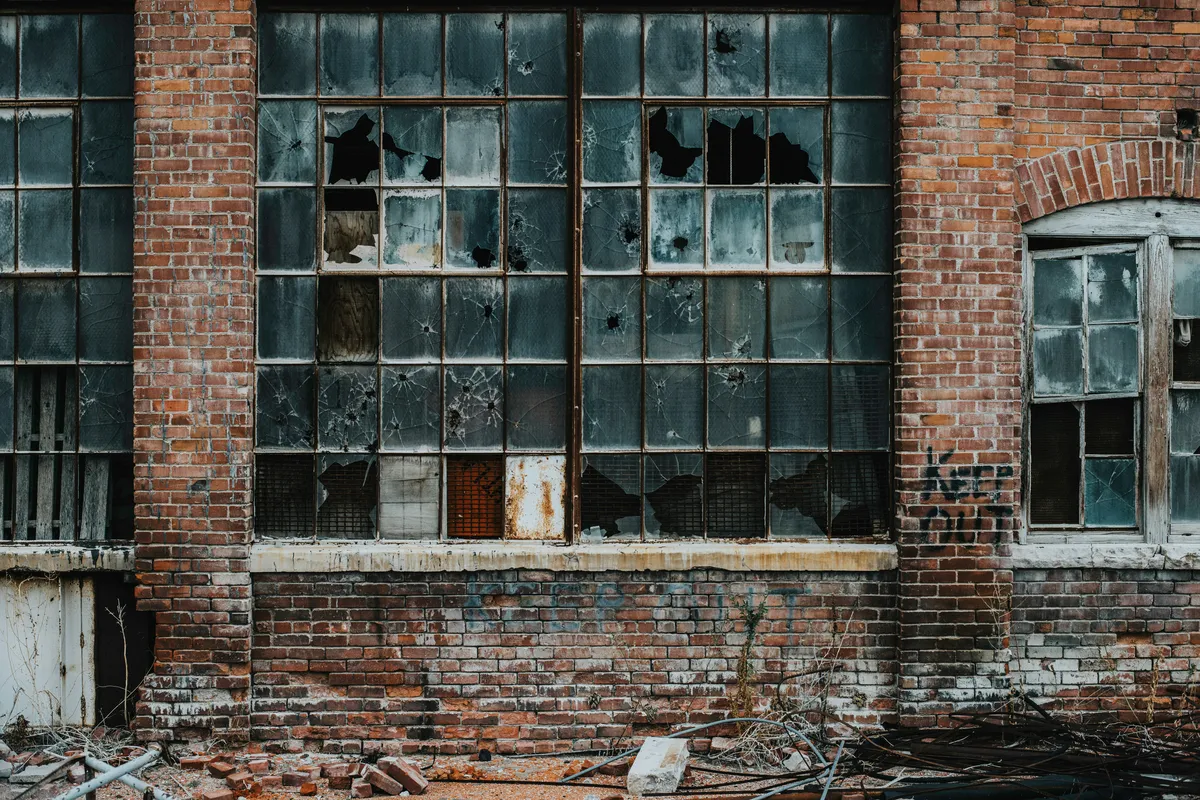 Source: Tara Evans, 2018.
The last two years have been better. Neither drought nor flood troubled the Lakelands, nor did a late or early frost. Cnidarian and crystalline zombie outbreaks were limited to small pockets. Animal populations stabilized, as much as they ever do. Mutual aid societies had become more efficient, and foreign aid supply chains were in place. Communities started rallying. There were still plenty of problems left over from the Bad Years, of course: bandits and wargs prowling roads fallen into disrepair; tensions between the local powers, higher than they had ever been; feral flocks of ant-sheep still roaming. Isolated towns were still vulnerable to threats from without and within. But in places like Tri City, Five Stages, and the Thames Baronies, there's now an air of optimism that's hard to deny, as adventurous souls strike out into the places lost to the Bad Years, looking to salvage what they lost, reclaim their homes, stamp out lingering threats, or bring glory to their names by facing dangerous enemies.
The Bad Years are over, some say. Only time will tell.
My goal with the Bad Years is to provide a more immediate micro-apocalypse, heightening the post-apocalyptic elements of the game without compromising the fantastic-realistic and anti-cynical ethos I'm trying to achieve. First, scavenging is a big part of the genre, but it isn't all that realistic in settings that take place decades or centuries after the cataclysm that ruined the world (sorry, my beloved Fallout). The Bad Years provide an explanation for the more recent abandonment of valuable, durable goods. (The other explanation is the Weird: pre-Arrival cities are still full of useful junk because they are just that deadly.) Second, I want to give players opportunities to reclaim lost settlements, especially ones in areas that are mostly abandoned. The only way to make sense of that in the context of what I've already developed is to clear out a swathe of territory with some calamity or series of calamities – but I want to do this without recreating the frontier narratives of North American imperialism. Therefore I hope to frame this as a matter of resettling rather than settling. It likely wasn't strangers or enemies who lived on the land you explore and owned the treasure you recover; you or your family likely did. If not that, the owners were at least the people paying you to go out there. Third, roaming monsters and brigands and cults make more sense after a period of destabilization. Growing dreamzones could probably explain the monsters by themselves, but bandits are more common in periods and places with disintegrating social bonds and institutions.
For whatever it's worth, I've been concerned about the colonialist implications of the post-apocalyptic genre since I played Fallout 4 in 2015/2016, long before the most recent conversations about the colonialist implications of tabletop adventures. That I'd planned to tackle this topic now is just a lucky coincidence. (See Habeeb's "the default dungeon is colonial," IsaacIsAfraid's "Anti-colonial Dungeon," and Zedeck Siew's Bluesky thread for examples of this discussion, if you're unaware of it.) The Bad Years, however, I came up with much more recently, as a way to give players familiar post-apocalyptic scenarios without violating the game's ethos or recreating colonialist implications too heavily. Or, at least, that's my hope; whether or not I'll succeed is yet to be seen.
In terms of modern-day southern Ontario, I think the Bad Years hit hardest in a band along the border between present-day Huron and Bruce Counties, the border between Wellington and Grey Counties, and into Dufferin and Simcoe Counties. There might be another pocket of particular hardship in Lambton, Middlesex, and Kent. I don't plan to define much of the geography outside of southern Ontario and western New York, but it's fair to say that the rest of the Lakelands have its own abandoned regions, full of raiders, beasts, cults, and ghost towns. You can design these to your own heart's content.