Names in Games: Turn to the Poets?
I've been circling around a post about names in games, as a (by now extremely belated) addition to Zeph Siebler's bandwagon on this topic at Sundered Shields and Silver Shillings. It's so belated because I feel like I have something to say that has something to do with what the MCDM team say on page 23 of Draw Steel Heroes, and also has something to do with Michael's post "The Importance of Being Earnest" at 1999 A.D., and also also has something to do with names in Jake Eldritch's Mutannany and also also also has something to do with problems I'm seeing in my own attempts to make naming languages for the Lakelands (see, for example, here). Unfortunately, I'm still just circling around it, and can't actually get to something coherent. So, instead, I'm going to point to some resources and then share an insight or two I've picked up from linguistics and poetry.
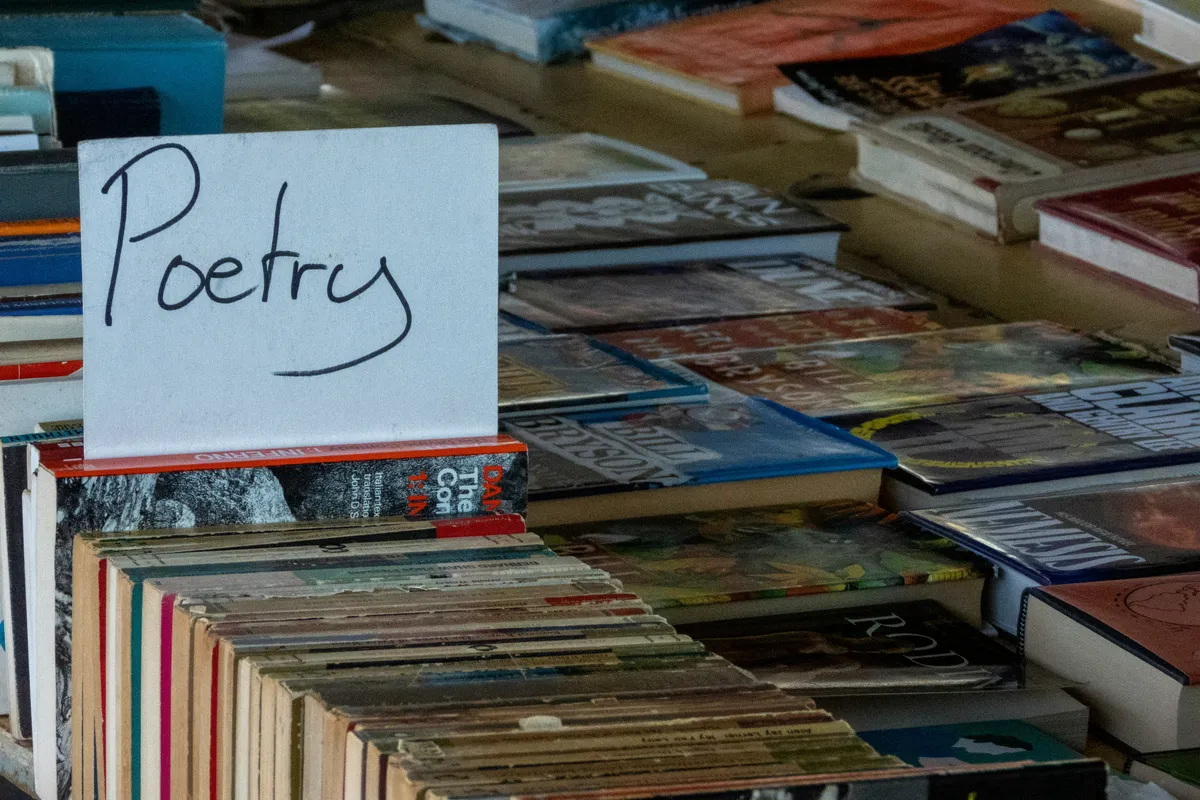 Source: Nick Fewings, 2019 (Unsplash license).
Resources
First, Lillian has "Sound and Fury," an onomatopoetic word generator, at Sora Nostra.
Second, "The Language Construction Kit v2.0" at Zompist has pretty much everything you need to build a naming language, at least as far as linguistic principles go.
Third, that section I mentioned on page 23 of Draw Steel Heroes might be worth thinking over:
For some players choosing a "good name"–by which they mean "authentic to the setting"–is important and can take a while. Because the right name can ground a character in the world, and this can help the player feel more immersed in the fictional reality. It also communicates to the other players that you're serious about the game and your hero.
For other players, choosing a comedic, joke name communicates the opposite! You are here to have fun and screw around and taking things seriously is something you already have to do all week, and so you pick a ridiculous name just to get a laugh because that's what you're serious about.
The choice of a name is an important one, because it says a lot about you and how you view the game as a whole.
I say it needs thinking over because I'm not entirely sure about the implications here for worldbuilding. That's one of the things I'm considering in relation to all the different posts and games I mentioned above. Does it make sense to build in diegetic reasons for joke names? Or does that do those players a disservice, because it doesn't allow them to pick a name that isn't serious about the setting? Or is it a waste of time, because the players who want to choose these names wouldn't use the diegetic reasons anyway? Am I just trying to make everyone play the way I like to play? I'm still not sure.
My Own Insights
I have, from time to time, attempted to write poetry. I'm mediocre at it, but I do have the benefit of studying literature in university and doing casual, piece-meal, amateurish research into linguistics. What I'm saying is, I have picked up a handful of things about making words sound good. I haven't picked up enough to be a good poet, really, but I've picked up enough to help with naming things.
One of the problems with writing poetry is that heavy alliteration and end-line rhyme are often too heavy-handed, but the form does want the intentional use of sound. Poets have thus developed techniques for repeating sounds in a poem without being heavy-handed about it. We can use some of those to make our names in games sound more appealing.
One of these techniques is assonance. The basic idea here is that you repeat some of the vowels within a line, but not the consonants. "She hears these unnerving screams," for instance. Note, as in this example, that the vowels being repeated have to be the actual sound, and not the letter. It helps, then, to practice listening to the phonemes in words rather than just looking at the words as written. At the very least, you can check the IPA; you don't need to know what the symbols mean to observe if two words use the same symbol for their vowels.1 Consonance is similar: repetition of consonant sounds within a line. Consider the phrase "goblins, ogres, bulettes, and naga," in which the last three nouns reuse all of the consonants in the first item. If either of these repetitions happened at the beginning of words, we'd call it "alliteration," but I'm talking about using it inside the words, where it is less obvious but still sounds good.
Another trick that I've only recently started to appreciate has no name that I'm aware of. It's like alliteration, except the words start with aren't identical but rather similar in a very specific way. Many consonants come in pairs, one voiced and one voiceless. Take /t/ and /d/ as an example: you do the exact same thing with your lips and tongue when making these sounds, but you voice /d/ (ie. use your so-called voicebox) while leaving /t/ unvoiced. Say them both and, if you pay attention, you can feel the difference, not just in your throat but in the way the voicing causes your lips or tongue to vibrate. Other pairs include /s/ and /z/, /f/ and /v/, /k/ and /g/, /ʃ/ and /ʒ/,2 and /þ/ and /ð/.3 In English, "ch" is /tʃ/, combining a "t" sound with an "sh" sound; the voiced version, /dʒ/, appears twice in "judge." (Sorry, Django, but the "d" at the beginning of your name isn't silent.) My contention is that if you start words in a name or phrase with voiced and voiceless twins, it's satisfying in much the same way as alliteration is, but sounds less obvious and heavy-handed.
Something I've been doing since discovering Mutananny is, of course, making PCs and NPCs for the game. Some of their names are examples of what I'm talking about, because I spent an unreasonable amount of time tinkering with them. Take Kelsey Knockskulls, a double-header pit fighter/ballyhoo VIP. Although both names start with the letter "k," one of those is silent, so this isn't a case of alliteration. However, all three consonants in "Kelsey" – /k/, /l/, and /s/ – reappear in "Knockskulls," so it is an example of consonance.
Or take Jackson Three-Cheeks, a three-legged puppeteer VIP. According to the preview, a good name in Mutananny sounds a bit like a playground insult, and I think "Jackson Three-Cheeks" fits the bill. But it also has assonance (pun unintended) within "Three-Cheeks," and the /dʒ/ at the start of "Jackson" has a voiceless twin in /tʃ/ at the start of "Cheeks." Furthermore, "Jackson" and "Cheeks" have consonance in the repeated /ks/. If you wanted a woman's name instead of a man's, I would say Jacqui Three-Cheeks isn't bad, though Trisha Three-Cheeks fits the bill better. (The /tʃ/ that starts "Cheeks" is divided into /t/ and /ʃ/ in "Trisha," and it has that /ɹ/ in both "Trisha" and "Three.")
I don't often use the vowel order in English's ablaut-motivated compounding (as in "knick-knack", "zigzag," "tic-tac-toe," "criss-cross"), but I wonder if you could try playing with that, as well.4 I don't mean using ablaut-motivated compounding exactly, but would it sound good and be memorable if you took note of the vowel sequence and deliberately chose vowels in that order for your names? I don't know, but you could try it. Or, maybe, would deliberately doing the vowel order wrong be more memorable: a gnome named Tock-Tick or a goblin named Zagzig? Play with it and get back to me?
This isn't a quick process. It takes time to try out combinations of sounds and see if they work. Don't turn to techniques like this if you need a name for an NPC on the fly. But if you want something that sounds good and if you have the time to mull it over, then the techniques of poetry can make your NPC names sound nicer and, perhaps even more important, easier to remember.
Of course, phrases with assonance in one dialect might not have assonance in another.↩
Here we have /ʃ/, which is "sh" from "shirt", and /ʒ/, the j at the beginning of "je" in French. As it happens, /ʒ/ also appears in the middle of the English "pleasure."↩
These are the first sound in "thing" (/þ/) and and the first sound in "this" (/ð/).↩
The idea here is not that you use every vowel in the sequence, but only that those which you use always appear in the same order: /ɪ/ > /ɛ/ > /æ/ > /ʌ/ > /ɒ/ > /ʊ/. It's always "bing bang boom" and never "boong bang bim."↩